Long before 1980 I had learned, sadly, that the countries my government decided to label as enemies were not necessarily my enemies. Take Vietnam: It was a proxy war fought during the Cold War which was aimed at the USSR. Fast forward to 2000. Vietnam has achieved its “Freedom and Independence” (Ho Chi Minh) after fighting two colonial powers—France and the US. Sure, they have a socialist model of government, but they are now part of the world economy; American tourists flock there, including many Vietnam vets. The USSR is gone. 50,000 names of US soldiers killed are engraved on the DC war memorial.
Take Iraq: We went there under the false information that they were preparing atomic bombs; and we were mad about the middle eastern guys who had caused the 9/11 plane crashes and American deaths. Were they Saudis? Was Iraq hiding Osama? Oh well, somebody has to pay. 20 years later, what do we have to show for all the combat deaths and loss of government treasure? Osama wasn’t found there. He was in Pakistan. Iraq is a mess, and no friend of ours.
You get my point. When you live in an empire, the reasons for enemy status usually have nothing to do with us civilians. We may enjoy the fruits of empire—avocados, all year around, but the USA is not a football team. Patriotism is not a “my county, right or wrong” proposition. I do not park my brains at the door, don my Viking headdress, and march in. I am not anti-American; I am a realist.
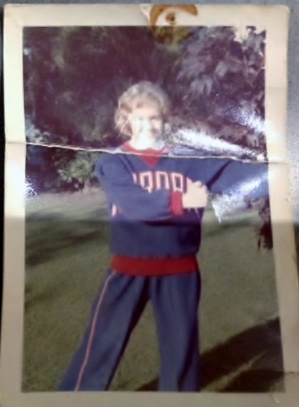 So, in 1959, I was a junior high cheerleader in the Midwest, oblivious to what most of the world was doing, cheering for my team. The Bay of Pigs invasion sanctioned by President Kennedy, and the subsequent showdown with the USSR over sticking missiles in Cuba, in another Cold War proxy battle, was not in my history class. In the fall of 1963, I was a freshman at Stanford, when my president was assassinated. Speculation began about the reason. Cuba factored into the speculation, by some, suggesting the mafia, whose rule over Cuba under dictator Batista had been overthrown by Fidel in 1959. This was shock therapy to me, opening my mind to a world that had been passing by unbeknownst to me in the comfy cave.
I sent my first overwrought letter to my mother, signaling that something had changed her conservative daughter. Yes, and that was just the beginning. By 1965 I was against the war in Vietnam, thanks to a world-wise taxi driver in Paris. A year later of debates on the war and I supported the NLF and could sing the lyrics to The Ballad of Ho Chi Minh. In 1967 a Stanford prof and member of NOW convinced me I could go on to graduate school; then in 1971 I was marching with my sisters chanting women’s liberation gonna get your momma, gonna get your sister, gonna get your girlfriend.
I began looking for models of governing that didn’t include invading small countries, building a bloated military, and resisting the active participation of women in the economy and governing. Cuba fit the bill. Not a wannabe empire like the USSR; continuing to support the arts and music, unlike Mao’s China; successfully building a multicultural society, post slavery under colonial rule; working wonders in public health and literacy, compared to other Latin American countries. The only problem was that my country was hell bent on bringing revolutionary Cuba to its knees.
Back to 1980. A multiracial group of Twin Citians, including me, formed a plan to visit Cuba as a journalistic project. The infamous Mariel Boatlift had taken place, allowing 125,000 emigrees, with dubious pedigrees and encouraged to leave by Castro, to arrive in 5 months. My husband at the time was a criminal defense lawyer for the poor at the Legal Rights Center. He had occasion to provide defense to a number of Marielitos who were afroCubans and who had committed some offense in the US. In conversations with them they had compared their status in Cuba with that in their new country. “In Cuba we had money but nothing to buy. In the US there are many things (like health insurance!) to buy but we have no money”. When he mentioned our group’s interest in comparing race relations in the two countries, they were enthusiastic. They had family members back in Cuba and thought they would love to talk with us. We were excited and started fund-raising. We had not factored in the effect of Reagan’s presidency. Soon new punishments were meted out to Cuba and anyone who dared visit. Our project collapsed.
Instead of a visit I began supporting a group providing material aid to Cuba called Pastors for Peace. For the next few decades I busied myself with working, raising children, and fighting for other human rights causes.
Fast forward 40 years. A local friend of ours who plans trips to interesting places planned to take a small group to Cuba in the third week of January 2024. We jumped at the chance. Six days plus one day in and one day out. While onerous sanctions are still in place by the Biden administration, they were worse under the Trump circus. We were warned by our friend, who took two groups to Cuba the year before, not to expect this to be a typical island paradise vacay. We looked at the itinerary, which seemed to be a nice mix of historic cities, one or two beaches, lots of good food and music, and a chance to see how 60 years of great power bullying had affected the utopian vision of the revolution.
There were severe shortages of goods and we were advised to bring in some of those items that could be passed along, people to people, when we got there. We chose OTC meds and USB drives, that could fit into a full-size suitcase. In order to travel to Cuba now, tourists must declare the purpose of the visit and fill out a set of forms online, to show before embarking for Cuba at the Miami airport. Since ours was tourism, we were expected to keep a log showing how our money went to “support the Cuban people”. That was precisely our expectation, so no problem there. We left Miami on Jan. 19 and in less than an hour we were in another world—of decay, beauty, joy, political history, struggle, and resilience. My next post will detail what we saw, what we learned, and what defied our expectations.


 Other states, other lives, other souls
<
div dir=”ltr”>This is great, Carol. I
LikeLike