Twenty-five years from my last trip into Mayan territory (Belize) I am back. This time with my grown-up daughter, who watched the Smurfs in Spanish in Cancun at age 6, and her 8 eight-year-old daughter. Our base is Merida, the capital of the Yucatan, and the heart of the Mayab, the Maya territory of northern Yucatan, captured beautifully in this article in Yucatan Today on Yucatan trekkers. I was last in Merida in 1992. My husband was here two weeks earlier than I this year, with a different group. Then the weather (the first two weeks of February) was rainy and cool. They also suffered a bout of Montezuma’s revenge. Now we are here in the second half of February. An anticyclone settled in and it has been in the 90s during the day the whole time, and dry. No revenge. It just proves there is a god Ix Chel and she likes me better.
Merida has become a mecca for expats from the north. It has close to a million people and is considered by many the safest city in North America. Modern Airbnb’s abound in the center of the city and it is safe, walkable, and Uber-able. Food is varied, from traditional to gourmet. We found markets nearby to buy basic food stuffs and there is an organic market with cafes on Saturdays. There is no problem getting one’s 8k-10K steps in everyday, unless you are heat intolerant. Be sure to rent a place with a pool! Some ability to speak basic Spanish is helpful, as it is more common for local shop keepers and waitstaff not to speak any English. Even at the airport Spanish predominates.
Merida manages to straddle two opposing forces: Mayas, who have lived in the region for perhaps 3000 years, and post-colonial Spanish, who arrived in the 1500s. Thus began a prolonged war for hegemony which in 2022 seems to have reached a tolerable balance of forces. The Catholic Church stole stones from the Mayan temples to build their cathedrals, but the Mayan culture and history dominate the cultural landscape. On Friday evenings you can go to the primary cathedral in the Centro neighborhood and watch a raucous reenactment of the ancient Mayan ballgame in the area in front of the main entrance. The game is a mix of soccer and volleyball, with points scored when the ball flies through a 10-foot-high donut hole. The finale is a shorter game, where the ball is set on fire and players must throw the ball from person to person without letting it touch the ground, to set up for a score. Remember the game hot potato? There is nothing Catholic about this ritual. I suppose the Church’s attitude is “we won, so let’s be good sports about it.”
Besides getting to know an old Mexican-Mayan city by walking around, we spent a third of our time getting more hands-on knowledge of how the Mayans of the Yucatan lived and how they live now. Merida is not Cancun. Cancun is a made-up town designed to bring in massive tourist dollars at the price of environmental and cultural degradation, and drug cartels. Merida is a 500-year-old city which deserves our respect and curiosity. There are also beaches and cenotes and shopping. I am not a travel snob.
If the reader shares my interest in this indigenous group and their history of repression, resistance, and achievements, over centuries, I offer a few experiences that I enjoyed. There are two museums that specialize in Mayan art. One is the Mayan World Museum of Merida. It is large, new and scholarly. The second one is the Museum of Popular Art of the Yucatan It is housed in an elegant mansion in the Centro neighborhood, and is small. It features the art of Mayan backstrap weaving, as well as pottery, jewelry, and these magical wooden painted creatures.

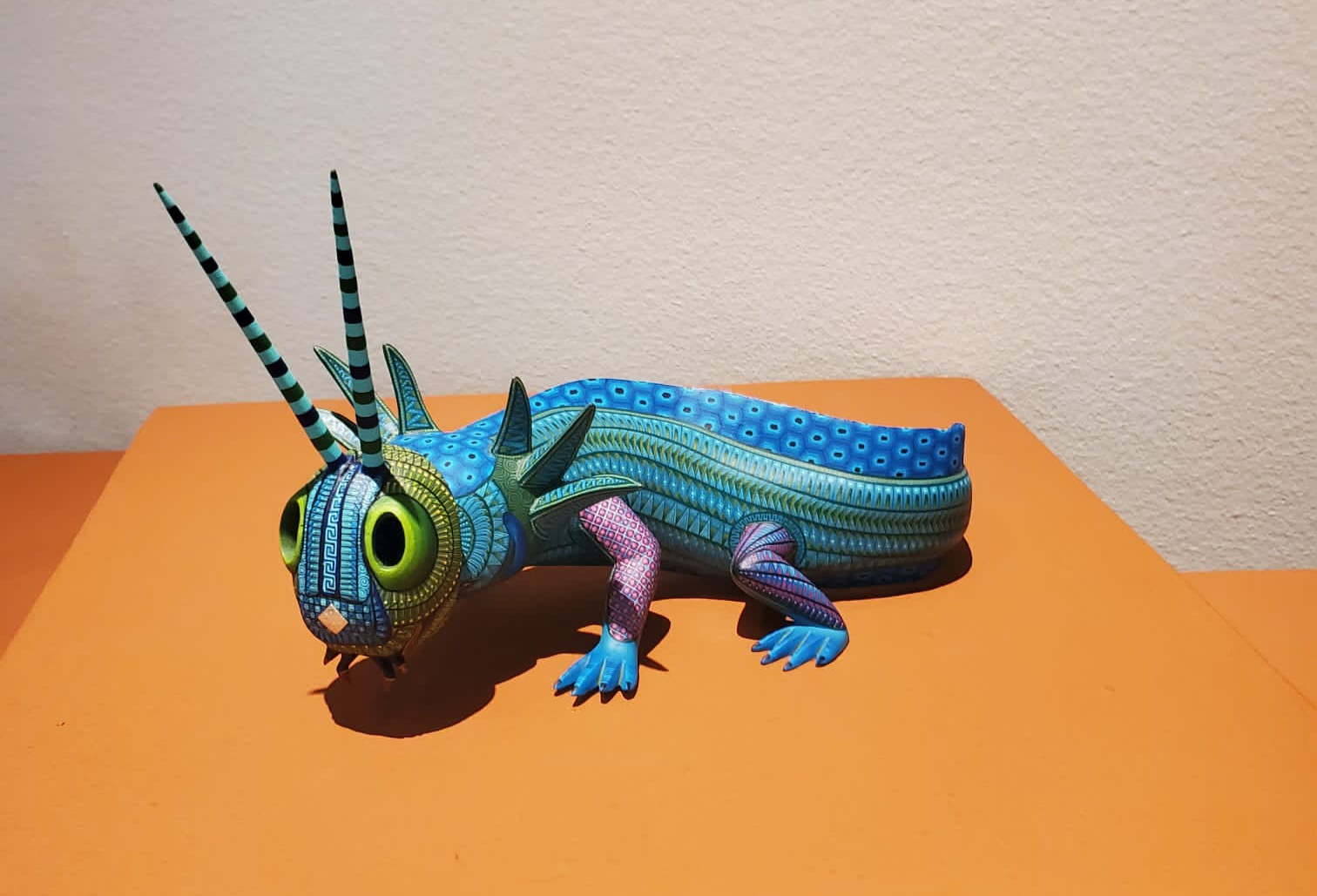
Mayans have mixed with Spanish and other indigenous groups and have become urbanized in their search for stable ways to make a living. I was told that pureblood Mayans have tended to stay in small towns surrounding Merida, so we rented a car and visited three towns. Two–Kimbila and Izamal–are noted for their traditional embroidered clothing for women and guayabera shirts for men. We were not disappointed. Our shopping mostly completed in these towns, we also enjoyed Izamal for its decision to paint every building in the town bright yellow.

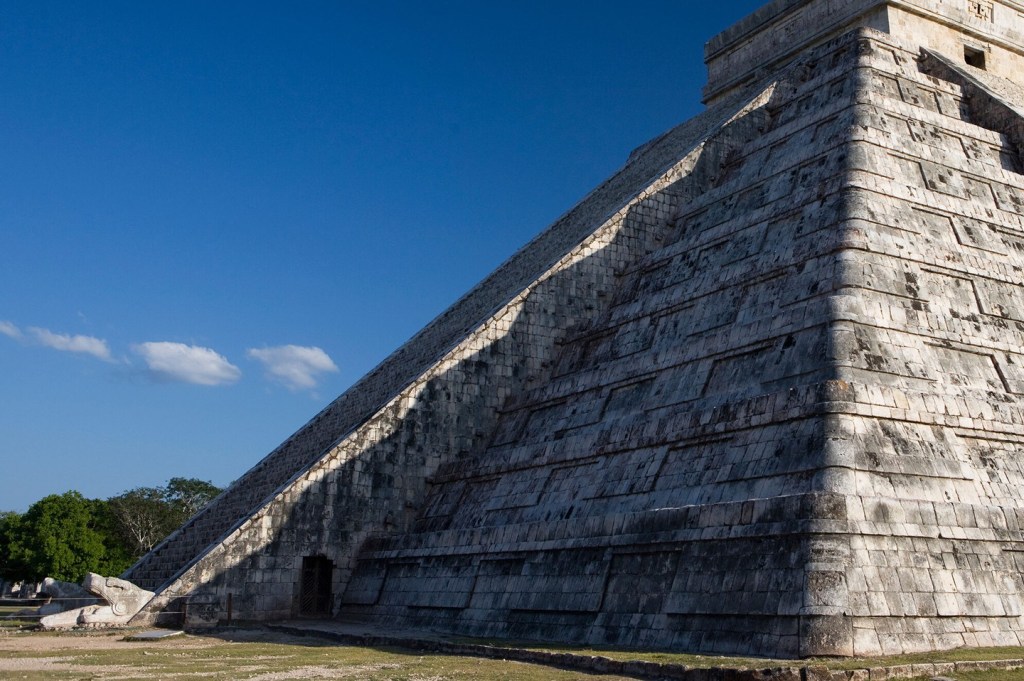
One day later we were back on the road with a guide to Chichen Itza, the most famous Mayan ruin in Mexico, followed by a dip in a nearby private cenote in the town of Toluca , and another trip through Izamal to climb smaller, partially excavated pyramidal structures. The guide was a certified Mayan history expert. Stopping at the base of the largest pyramid to the god Kukulkán, or feathered serpent, at Chichen Itza, Edgar shared with us a new level of knowledge acquired by archaeologists in the thirty years since we were there last.
Ceremonial cities such as Chichen Itza were reserved for the ruling elites, while the common people lived in the surrounding countryside. Mayan rulers acted like authoritarian elites everywhere, declaring themselves, first, chosen by the gods, and, later, gods themselves. Since they were the only ones who could read and write and study the heavens, the common people were dependent on them for weather prediction and planting crops. The rulers included symbolism within the pyramid’s design to supply important information for illiterate agriculturists who used slash-and-burn methods to prepare the barren soil for planting in early spring. An example was the placement of two cement Kukulkán serpent heads at the bottom of low walls flanking the main staircase, such that, on the spring equinox, sunrays ran down the walls lighting the bodies of the serpents (See below). This was the signal to begin the soil-building process. Bas relief carvings throughout the complex celebrated the ferocity and success of the warrior class, reinforcing their right to rule.
Trip website
Two questions have puzzled archaeologists since the Mayan cities were discovered. 1: The timing and extent of construction, and 2: the causes of the sudden collapse of these cities. Concerning #1, they have found at Chichen Itza another earlier temple underneath the big pyramid, along with earlier large plazas beneath the one visible to us. Concerning #2, there is much more consensus now that tribal warfare figured strongly in the abrupt abandonment of many of the Mayan cities by the Itzas in about 500 to 700 ACE. It was repopulated by the Toltecs in about 900.
A warrior culture existed among the elites of various indigenous Mayan groups, spawning battles over territory and resources and slaves. In addition, weather changes resulting in extended drought and crop failures proved the tipping points for many Mayan cities.
That ferocity has helped the Maya to retain a strong presence during the over 500 years of Spanish colonization. The fact that the many Catholic churches throughout the Yucatan often look a bit like forts is because they were actually built to defend the new elites from attacks by the old elites as part of the conversion process. They say that history is written by the victors. For the Maya their story is still being told.
 Other states, other lives, other souls
Interesting, Carol, and I have forwarded this to two friends who just returned from the same area. Your Spanish must be great by now- wish I knew more than “Ola” or “Hola”!
>
LikeLike
Great museum photos and yellow Izamal!
LikeLike