Month seven of the coronavirus pandemic.
Summer in Minnesota is short. It provokes a headlong rush into socializing, Bermuda shorts, BBQ’s, outdoor music, festivals, and ending in the final glut of the State Fair, the last two weeks through Labor Day. Summer 2020 was not so different, despite the narrowing of the choices for entertainment: virtual, instead of live, concerts; townhouse happy hours–outdoor and masked; socializing with a few friends and family at a time on our giant deck; swimming with the grandkids in Cedar Lake and our pool; short hikes and longer bike rides with our usual, now more careful, action posse. There was no State Fair this year, but there have been years when we did not go, so we could imagine it was one of those off years.
Summer turned to fall. Our warmish fall produced a colorful array of trees earlier than I remember. Our townhouse pool stayed open into mid-September, but I no longer thought to head over for a 9 pm swim. The patterns for fall are fixed. Harvest the last vegetables and then button up the garden in late September and early October. Swaddle the deck furniture in snow and ice-proof covers. Bring in the geraniums, succulents and ancient begonia to winter over until next May. Wait as long as possible to stop wearing sandals; likewise, for swapping out the short-sleeved shirts and capris for heavier sweaters and long pants. Organize our woods-walk Halloween/Day of the Dead party, Celebrate my birthday, then Thanksgiving, with relatives nearby.
I have always approached autumn in Minnesota with a swirl of emotions. Exhilaration–in the crisp cool air, gusty winds, absence of mosquitos, and carpets of leaves. It’s a great season for hiking and biking. Dread, because I know what comes next—a long cold winter from late November until late April.
This year the dread feeling had a new impetus: Pretty soon we would not be able to see our friends on the deck, have potlucks or dinner parties, bike around, or go door-knocking for our chosen candidates for office. Remembering those first well-attended family Zoom calls in April, which petered out pretty quickly after the novelty wore off, my husband said “let’s get out of here and drive to the East Coast in October!”
Both of us have relatives in the northeast: Maine, Massachusetts, and New York City. Our plan was to visit relatives, see the famous Maine autumn colors at peak, step in the Atlantic, stop in Massachusetts to see a sister-in-law and her farmer/teacher daughter, and end up in Brooklyn at my sister’s three-story brownstone. Yes, we had Coronavirus fatigue, but we planned to observe low risk, responsible practices throughout the three-week trip. Everyone on the visit itinerary welcomed us and had a plan for safe connecting in person. Our nephew in Maine had created three camping spots in the woods within his property. Our niece in western Mass had one up the hill on their small farm. My sister-in-law nearby would visit us at the farm and we could visit her, masked, at her semi-dormant family education job site in Historic Deerfield. Her husband is very high risk, so we skipped visiting him. My sister in Brooklyn would loan us her third-floor bedroom suite while she slept in the small room on the second floor near her new renter pod mate. We added Bar Harbor, Maine into the mix, because it had lobster rolls, ocean, Acadia National Park, and a KOA on the water with a tent section. And, it was the location of the Robert McClosky books–One Morning in Maine and Blueberries for Sal that we had read many, many times to our children decades earlier.
With our negative Covid-19 tests in hand, we set off with camping stuff, bikes, Audible books, Sirius XM, and a bucket with 100 pinecones. The last I planned to string together during the trip for our annual outdoor Halloween woods decorating in the last week of October. Our numerically-oriented 5-year-old grandson had helped me count them in tens on the sidewalk, so I was sure the number was correct. We chose hotels in small towns or suburbs for the four nights of the to and fro drive. Very empty; little or no contact with other humans; food, takeout back to the room. Tenting would be too much hassle along the way. One place advertised that they would need to see proof of negative Covid tests. Since they were electronic and there was zero cell service at the down-at-the-heels hotel, the East Indian proprietor said “don’t worry, I trust you.”. By this time in the pandemic, many public places had an air of exhaustion and “last one out, lock the doors.” We would search for takeout restaurants on the phone, find one near our stopping point, set the GPS, only to find it closed when we got there
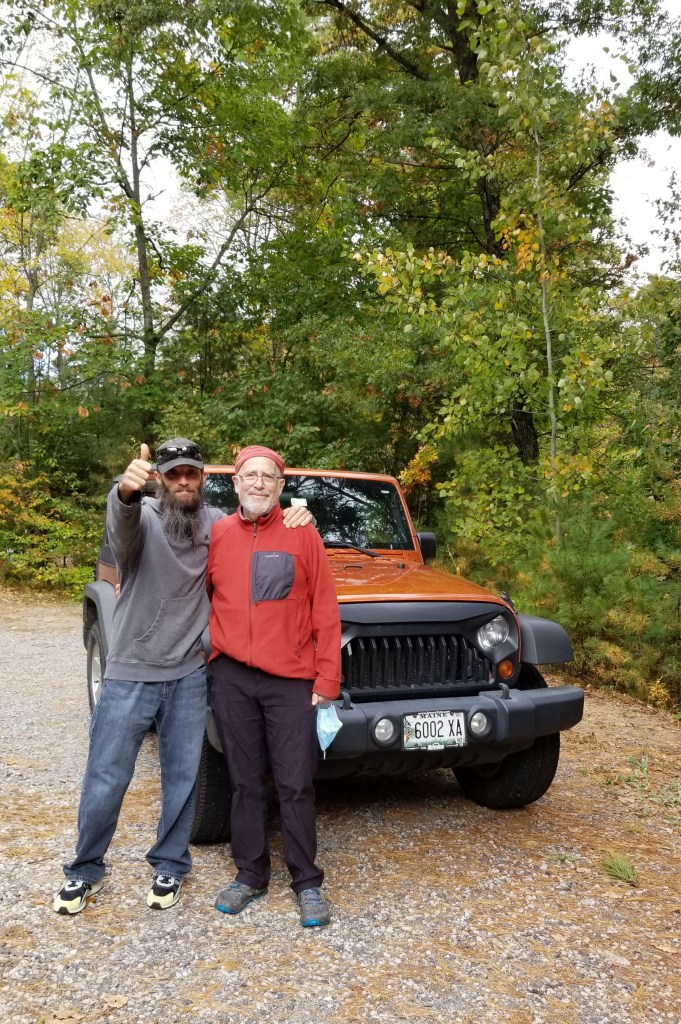
We reached our nephew in Sanford, Maine, on the third day. All our relatives seem to live such varied and unorthodox lives! The nephew has had many exciting jobs, from Coast Guard rescuer to forest firefighter, to EMT, and now to legal artisan marijuana growing in his side yard. He and his partner own not one, but three jeeps.
Their campsite was quite lovely, woodsy, and warm. Monday morning his partner drove down to south of Boston for her university food service job. The staff take Covid tests weekly and she said there had been no cases on staff so far. Then our nephew drove us in one of the jeeps with windows open to the Atlantic ocean beach near Portland, where we walked the sands and learned about how Hurricane Sandy had terraformed the beach. The Atlantic there was unusually warm this year and people were swimming in it late into the season.
We bid farewell and headed four hours north to the KOA campground twenty minutes away from Bar Harbor. This KOA’s website had written that only cash or checks would be taken in payment. We forgot the checkbook (what’s a checkbook?) but had stopped at an ATM to get cash. The receptionists seemed to have no knowledge of that rule and took our credit card gladly. We put up our tent next to a RV rented from KOA by two women. They had fled Orlando during the worst of Florida’s pandemic to safe (Bar) harbor in Maine. One had been furloughed and the other was working from “home” on her laptop. The two-month plan had turned into the five-month plan and they were now dreading the closure of the KOA just after Columbus Day.
While it was considered peak fall season, the locals were complaining that the colors were not what they should have been, due to the very dry weather. It was true. Minneapolis had better color, but that was little matter to us. The low-key fall resulted in more tourists leaving Bar Harbor by the time we got there. Good news for social distancing while eating. Everyone on the streets and shops downtown seemed to be wearing masks, even with (or because of) a very low case count.
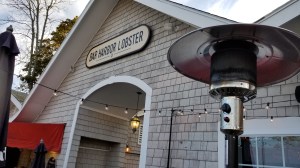
We stopped at a seafood restaurant recommended by the RV women and were able to get delicious takeout lobster rolls, clams and drinks, with no wait, and then stand around on the top floor where the takeout window was and eat safely enjoying the Harbor air and the food of the Atlantic gods.
Acadia National Park is within the Mt. Desert Island on which Bar Harbor is located, but includes several smaller islands as well, which are reached by ferry. Mt. Desert is pronounced like the last course of a three-course dinner, a bastardization of the original French pronunciation. It seems that the naming of Acadia National Park, the first national park east of the Mississippi, had nothing to do with the French-speaking Acadians who were pushed out of Canada by the British and ended up, many of them, in Louisiana as Cajuns (note: Louisiana Soundscape link sound starts 12 seconds in) In the park we walked along the Carriage Trails, a series of broken-stone roads donated and established by John D. Rockefeller, with the labor of the CCC in 1933. They are 16-foot-wide trails open to walking and biking. We spent three nights at the KOA. The last night we transferred to another tent site right along the harbor. It was close enough that we could pick up our tent and carry it over without needing to take it down. That night there were terrific gale winds rushing down the harbor from the north and into our site. Fortunately, we were below it all in our cozy tent and enjoyed our ability to work with whatever Gaia had to offer. The last morning I decided to dare to make a cooked breakfast on our Coleman stove, as the gale continued to howl. It was our first and last camp breakfast and it seemed a shame to drag all the equipment from Minneapolis without using it at least once. Facing the back wall of the stove to the wind, I was able to light the propane gas with the first match and keep two burners busy.
We broke camp by eleven and headed to western Mass for relative visits numbers two and three. By that time I was suffering some mystery injury which was causing serious pain in my hip and spine, depending on how well I managed to hold my back rigid. We scrapped the tent-in-the-hills option and got a motel in Greenfield, between our niece’s and my sister-in-law’s house. We got to our niece’s farm an hour or two before sunset. It is a lovely hilly spot next door to her boyfriend’s family farm. Part of it is rented out to grow wheat or hay and the small barn has been given over to raising goats for fun and profit.
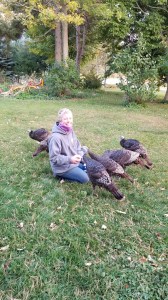
When we arrived, Sarah was getting ready to feed some turkeys who were milling about near their back door. She informed us that she had been given six abandoned turkey eggs by a neighbor and decided to incubate them. Long story short, she is now the leader of the pack.
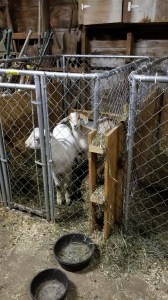
This was the second time we got to watch Sarah feed and milk the goats in the barn. A former milk maid at a dairy farm, Sarah has a relaxed methodical approach as she ushers in one milker toward the homemade milking stand, opening and closing various gates—goat in, goat out, kids into larger pen to receive engorged mother, grab hay; milk goat; return goat; grab next waiting goat. The final enjoyment was meeting their new dog—a Turkish breed, bred exclusively for managing goatherds.
Still a young dog, it was big as a pony. If it had jumped up on me as many laissez-faire dog owners allow their beloved pets to do, I would be on the ground moaning, but it was perfectly behaved. Its job is to patrol the perimeters of their pens at night, scaring off the coyotes.
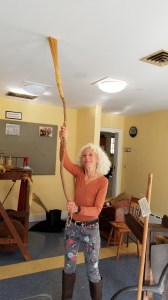
The next day we drove to Historic Deerfield to meet up with my sister-in-law again at her workplace. The day was balmy and we were given the quick tour of her historic broom-making operation. Broom corn was still standing tall in her garden. Inside the empty family education building were the historic machines for attaching the broom corn upper stalks to the stick and the mini-guillotine for chopping a straight sweeping end. Faith kindly presented us with a traditional cobweb broom she made herself.
After the demo, since biking still worked with my mystery ailment, we jumped on our bikes for an hour-long ride along the river and under covered bridges. After lunch outside at the historic Olde Deerfield Inn, we said good-bye to rural environs and headed down to Brooklyn.
Somehow I had discovered before leaving on the trip that the state of New York now required visitors from Covid-19 hot spots like Minnesota to fill out a form online no more than 48 hours before entering the state and agree to quarantine for 14 days from the day we left Minnesota. That would take us to October 16. We planned to leave for home on the 19th. Doable, kinda. Since we had been living in near quarantine conditions for months and had our negative tests in hand, I figured a bit of safe cheating would be ethical. We were ready to show our confirmations at the castle drawbridge I imagined had been erected at each road entry into New York state. No such drawbridge. We breezed through with no questions asked and headed south. There were recent stories in the paper about an upsurge in Covid-19 cases in Brooklyn, but we also learned that only certain zip codes were on lockdown. They were those where large Orthodox Jewish communities were located, and did not include my sister’s neighborhood. Like so many religious dogmatists, they were convinced that their G-d would watch out for them. No earthly precautions needed.
Ah, Brooklyn! Twenty degrees warmer than Minnesota this time of year. Plenty of unfrozen plants. Everybody wearing masks on the street. Many shops and restaurants were open in some way, but don’t try entering without a mask. A mini-universe of human diversity, seemingly getting along. We’ve visited dozens of times since my sister moved there from the Midwest to pursue her jazz music career in the early 80s. We would retire there in a second, but for all the friends and family we would have to leave behind.
Our first activity was to jump on bikes, strap the masks over our ears, and head out to a street closed to traffic a few miles away so people could enjoy listening to outdoor live music, playing their personal playlists on big speakers in a corner, eating outdoors, and enjoying the fall weather safely. The second activity on Saturday evening was to bike over to our favorite nearby art-plus space, Open Source, and listen to a live jazz band playing inside their garage with double doors wide open. My sister was on the sax, with piano, guitars and mad percussion. The audience stood or sat on folding chairs halfway out into the street. Neighbors walking or biking by sometimes stopped and adjusted their plans to watching live free music. Now that’s what I’m talking about!
The next day we started receiving daily phone calls from the Department of Health, checking to see if we were quarantining as expected. True to friendly New York City, they were not delivering ultimatums, but were personable, chatty, reminding us of the rules and sporting various ethnic accents. It was a vey effective approach, even though we did not completely follow the rules. I am quite certain that we were not infected and interacted on the streets in a way that would not infect anyone if we were. Now that we have been home for two weeks and did not develop Covid-19, I can say that without any tinge of doubt.
The only doubt I had was when my mystery hip/back ailment got worse and I called my healthcare insurance to get permission to visit urgent care for some relief. I got permission, but dreaded entering a space where Covid-19 was likely to be lurking. Thanks to the nurse line I also called, she suggested a video call with my primary instead. My primary, who has taken care of me for twenty years or more, heard my symptoms and saw where I pointed out my pain points. He made a quick diagnosis of at least a bad case of bursitis and prescribed ten days of Prednisone, which he whisked electronically over to the nearest drug store in Brooklyn. It cost $2.00. Hooray for Medicare! Hooray for MN HealthPartners! Hooray for electronic medicine! Hooray for nurse lines and sticking with one primary care doc!
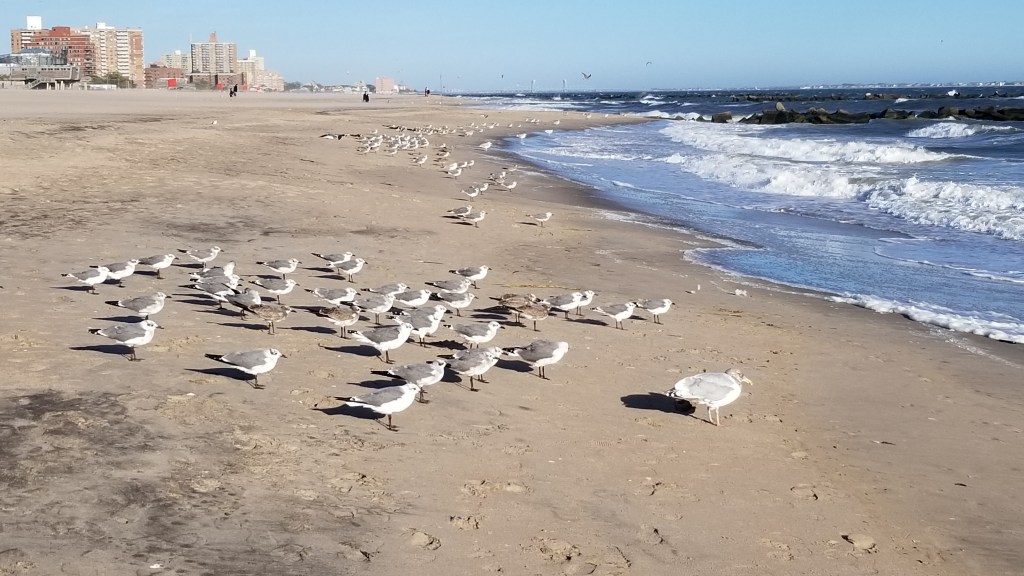
After five more days of backyard eating and reading, best banh mi’s ever, more live music, more visiting nephews, a very windy trip to Comey Island, and one last bike trip around Prospect Park, we headed home. It was worth it. Winter—bring it on!
,
 Other states, other lives, other souls
Great piece and love the pix above of the beach – makes me sooo homesick for the ocean
LikeLike
Carol I admire you… mixed with a little envy…
LikeLike