In July of 2019 I was visiting my daughter and granddaughter in Helena, Montana—rather longer than I expected because the adventure I planned for granddaughter Alder fell apart. I had intended to fly with her to St. Louis via Denver, where we would meet up with her cousin Theo who had driven there with his grandfather (“grandpere”, inexplicably) from the Twin Cities. The adventure was visiting the St. Louis City Museum, an indoor gigantic and artful adventure playground, built from an old shoe factory. Never fly anywhere via Denver. A serious storm delayed the flight until the second flight to St. Louis had left and there would not be another one for several days. Alder and I decided to stay in Helena, but our bags went on to St. Louis, eventually to return.
I tried to make myself useful while in Helena for the week, helping to put up shelves using lovely old barnwood stored in the garage. When I got to the garage, I discovered a large colorful piece of a wooden structure sticking out of the garage door. It was part of the yurt my daughter bought from a couple in Idaho who had lived in it year-round while a house was being built. It was a genuine Mongolian yurt (more properly, ger) , sold by an outfit in Oregon that contracts with builders in Mongolia. Yurts have been used by Mongols since Genghis Khan times.
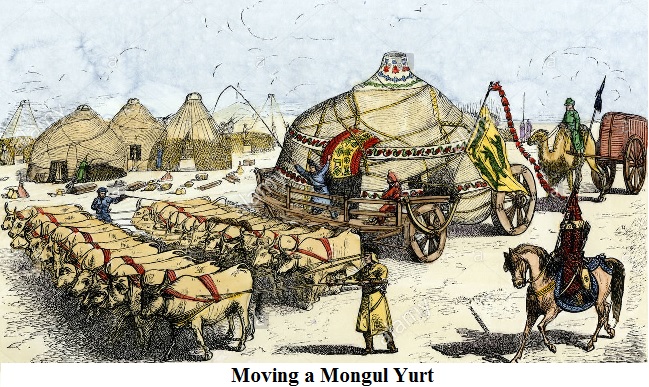
She intended to erect it eventually on some unimproved land she owns near Bayfield, WI. Sensing that it might be a while before that could happen and how long she would be struggling to get in and out of the garage, I had an idea.
“Why don’t you put it up in Helena just outside of town where Adam, her potter partner, has his studio and run it as an Airbnb?” I said. There aren’t many Airbnbs in Helena, and it looked from the pieces I could see to be really beautiful, large and sturdy. What do Montana and Mongolia have in common? A dry climate with extremes in temperature. Yurts are designed to keep families warm in cold, snowy winters and cool in hot summers. They are movable, for a nomadic population, but heavy and secure against strong winds, which Helena has plenty of. She considered it over the fall and thought it might be a good idea. Then the coronavirus pandemic hit and both she and her partner‘s occupations suffered and their incomes took a hit. The idea of an extra income source to hedge against economic downturns became much more urgent.
Fast forward to July, 2020, and I wanted to escape the quarantining in Minneapolis and hit the road safely. “Why don’t we come visit and help you put up the yurt?” I said. “Yes!” It was outside work, away from crowds; our pod would be safe. We always have such interesting work when we visit our daughter: cleaning up the remains of the organic straw bales she sold for a few years; helping repaint her house after it had been decontaminated by old lead paint; planning a food forest; cooking for 35 in a food truck ; learning to cook venison several ways when filling her freezer with food in anticipation of the delivery of Alder.
We drove out in our trusty Honda CRV, hauling 3 bikes, our 18-year-old granddaughter, and a car topper filled with camping gear for our safe trip there and back. We arrived Friday night and started planning the project on Saturday night with a visiting potter with mad carpentry skills. It soon became apparent that it would be more difficult to manage the timetables of the various helpers, and there were serious decisions to be made about what to set the yurt on, to raise it off the ground and level it. There was some gnashing of teeth and disappointment, but we finally decided that just helping to move the yurt pieces from our daughter’s garage to the future site would be helpful. So, Sunday morning Phil and I began, while our daughter gave a couple of professional massages to keep paying the mortgage and Adam finished up some greenware tasks at his studio.
That shit was heavy!! We had emptied out the car and taken off the bikes, so we looked to see what we could lift and what would fit in the CRV. There were bundles of long roof poles, painted bright orange with flowery decorations. Stunning, and made of some kind of Mongolian wood that the websites I consulted described as “light” wood. Ours were certainly not light wood. I managed to lift up my end briefly but worried that my spine would suffer as a result. I looked around at all my daughter’s spare parts she has as an urban homesteader and noticed some blue plastic rain barrels not in use and empty.
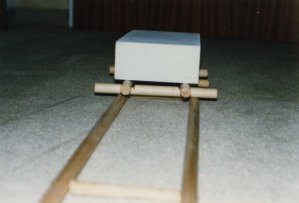
I got a quick image of movies I had seen about how the pyramids were built, without the wheel invented yet. You can see in the picture below what we did. A little better, but only for a few feet at a time.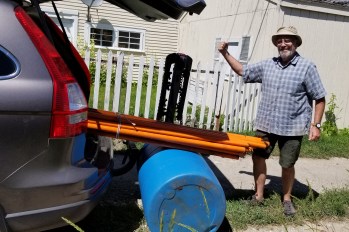
We filled up the rest of the car with lighter bulky things—oiled canvas cover, braided wool rope, etc., and headed to the future site. The temp was in the high 80s or low 90s so we weren’t looking forward to repeating this process five or more times. After emptying the car, we got a text that Adam had a much better plan. He had rented an open trailer and was on his way, pulling it with his big Montana-style pickup truck.
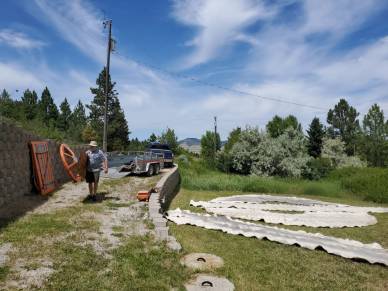
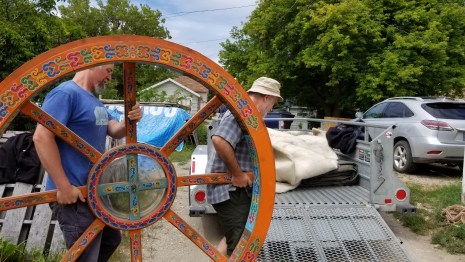
Now there were four of us and only one more trip needed. When we arrived at the studio site again, we decided we needed to put all the parts, especially the giant wool insulating layer, into some kind of storage in case of the rare rain. There was a fully loaded little storehouse at the site. We took everything out except the lawn equipment and then carried all the parts and stored them like a jigsaw puzzle into one half. Then we decided what could go away—old bikes to the bike giveaway store, unused gas cans, and one large mattress. 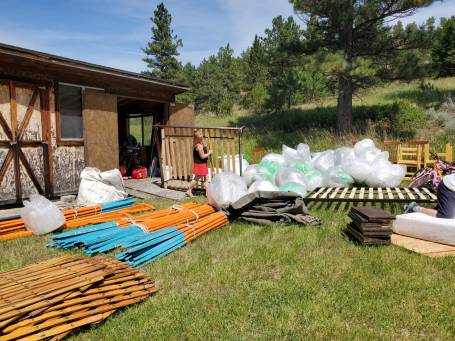 Finally there were 20-odd large garbage bags filled with packing peanuts used by Adam to send his onggi pots around the world to customers. We made a game of it with 7-year-old Alder to see who could throw them up and in among the yurt parts to fill any extra spaces. She was quite good; those soccer lessons paid off.
Next week, after we have arrived back home, they will start building the platform. I am sorry to miss the final setup, but below are some pictures from the web that show what it should look like. I think it will make a lovely, quirky Airbnb, with some kind of plumbing and a water source nearby. Don’t you think?


 Other states, other lives, other souls
What an adventure!
LikeLike
That is lovely! I want to stay there whenever I next travel West. In Mongolia these are called gers and the rule is anyone can stop in – even if the owner is not at home. But I wouldn’t do that!
LikeLike
Yeah, I read that yurt is more of a tourist word. from Turkey. not Mongolian. Boy, nomadic hospitality is really something .
LikeLiked by 1 person
Intriguing as always, thanks — hope to hear in the future about guests to the yurt
LikeLike
Love this description! You definitely know how to keep yourselves busy.
LikeLiked by 1 person
Thanks. Did Mark have a fun birthday? We have a belated video greeting.
LikeLike
Thanks for this fun post. I’ve always wanted to sleep in a Mongolian yurt. And I’ve always wanted to go to Montana. So now I can sleep in a Mongolian yurt in Montana! You do such a nice job of bringing accuracy to your adventure posts. I appreciate the pronunciation guide: “ger” not “yurt.” And onggi pots. Where have they been all my life? I hope you have a wonderful birthday, Carol. I’ll always remember your ruby treasures from 2019.
LikeLike