In August 2003 I spent a month in the West African country of Sierra Leone. I landed in Freetown, the Capitol, and then took a bumpy six hour ride in a four wheel drive SUV to Kenema. Kenema is a small town that made international news in 2015 because it was a hot zone for the Ebola virus. It was also a big diamond center where refugees panned for diamonds in the small rivers and sold them to Lebanese-run shops who then sold them to diamond merchants.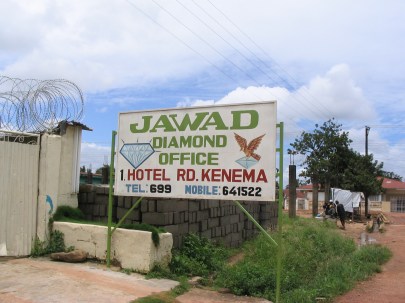 This small-scale unregulated diamond industry was ripe for what became known as “conflict diamonds”—diamonds mined and sold to fund the guerrilla war that lasted for ten years. This trip met my field experience requirement for a master’s degree in public health focused on global health. I was assigned to the Community Mental Health program established by the Center for Victims of Torture in Minnesota, which provided counselling to survivors of political torture and war trauma.
By 2003 Sierra Leone and Liberia were recovering from a decade of war and terrorism. Charles Taylor, the president of Liberia and leader of the rebel forces responsible for the disfigurements, murders, and diamond smuggling, had just stepped down and escaped to Nigeria, after being indicted for war crimes by the Special Court of Sierra Leone. Surprising to me, there was an air of hopefulness about and many NGOs were in the countryside providing services in the Liberian refugee camps and helping people newly-relocated back in their original villages after hiding in the bush or sitting out the horror in Guinean refugee camps.
One weekend I suggested to the Community Mental Health staff a trip to Tiwai Island Reserve. I had read about this newly opened reserve in my Lonely Planet book and asked my CVT host if we could visit it on a Sunday. The local staff had heard of it and that it was just reopened, but no one had been there. It was only 53 miles from Kenema, but, of course, not on paved roads. They all agreed to the trip enthusiastically.
In the late 1970s, Tiwai Island had been designated a special biosphere for wildlife conservation. The small island is located on the Moa River in the Upper Guinea Tropical Rainforest in southeastern Sierra Leone, about 30 km from the Liberian border. Ecological research began on Tiwai in the early 1980s. Some of the researchers, along with the Barri and Koya people, who share ownership of the land, requested that it become a wildlife sanctuary, and it was officially designated a reserve in 1987. In 1991, the civil war in Sierra Leone broke out and support for the island stopped. Eleven years later, after peace was declared in the country, the Environmental Foundation for Africa, along with local communities, launched a project to restore the reserve as a model for protected area management and community development.
Among the many endemic species reported to UNESCO were the pigmy hippo, endangered chimpanzees (Pan Troglodytes), red colobus and Diana monkeys, and over forty species of bats.
That Sunday our trek group was comprised of myself, the American program coordinator, an Australian psychologist, a Sierra Leonean driver, two other local staff and a guide, a Mr. Park (sic!), who used to work for the park before the war. We would be traveling in a classic International NGO 4×4. We brought a shovel, since it was rainy season, water, and snacks. Mr. Park had advised us earlier to leave before 10 am to get there in time. To my dismay, it was noon before we began, because the program coordinator was unable to tear herself away from the office on a Sunday.
The road we were traveling on quickly became very, very bad: rutted, steep, rocky, and wet, alternately.  We crawled along precariously. Next came flooded bridges, which the 4×4 could handle well. At 2:45 pm, we got to the small village that was to be the jumping off point to the island. After driving through deep bush villages, the road seemed to stop and we began driving through back yards and front yards. Seemingly hundreds of children were waving at us, we being such a sight: three pamui (white) women and four African men in a newish car. It soon became apparent that this was not the jumping off spot after all. Instead we picked up two more village men who were going to take us into the Reserve. We discovered that we also must check in with the Paramount Chief of the district for permission to go through his territory!
We saw the opportunity to get to the Reserve before the end of the day fading before our eyes. Being near the equator, darkness fell at 6:00 pm. Nevertheless, we all jumped into the car to head to the next village where the Paramount Chief lived. We parked and walked for a while to his house. In the middle of this basic, poor little village, there appeared a genteel covered porch attached to a small house. We were invited to sit on little wooden carved chairs. On the porch was also a lovely jute hammock. One by one, everyone in the village came to watch the strangers greet the Chief. A hush fell on the crowd, even the little children, and we waited—and waited–for him to arrive. Finally the Paramount Chief arrived. He had P.C. written all over him: beautiful spotless white dress shirt and pants, wire-rimmed glasses, slim and tall, with an air of education. He lay in the hammock and welcomed us beneficently. Mr. Park, our guide, respectfully stated our business and asked permission to enter the Reserve. The P.C. said “yes” and “when would we like to go?” “Now”, our guide said. The P.C. looked surprised, but recovered and sent us away with his blessing. He included orders to tell the next lesser chief we would encounter to let us go without a shakedown for money.
All hope was really lost now. It was 3:30 and we were not even at the river’s edge where we would embark for the island. Still, we continued on, unwilling to abandon the project. All of us women were sure that we couldn’t go back on the rocky, muddy, wet, steep road home after dark. We must go back at 4:30 to avoid that fate. But the locals didn’t want to quit. They believed they could drive in any conditions.
On we went to the next village. At the point where the road seemed to turn into a narrow walking path some women began shouting at us to stop. They arranged for a young woman with a newborn to ride with us to the next village. They directed our 4×4 confidently down the walking path, which seemed impossible to traverse by car. One older man held the infant. I was certain the baby’s neck would break from one of the severe bumps we experienced.
Finally we broke through the jungle into the final village. The baby was fine. We parked and attracted another crowd. We marched quickly to the bank of the Moa River and hiked down a steep, wet path to the river’s edge. It was now 4 pm. Here was the boat to take us across to the Tiwai Island Reserve. It was a small dugout canoe, able to fit three, and we were nine. However, the entrepreneurial villagers sent a bicycle down to the next village on the river where they told us a speed boat would come and pick us up.
The waiting began again, this time in “malaria city”. Soon it was 4:30 with no boat in sight. We finally had to admit we would not reach Tiwai that day. Everyone but me, who would be gone back home, agreed to return in November after the rainy season was over and try again. I pulled out my new little digital camera in my back pack with the squashed bananas and leaking water bottle and opened it to snap a picture to commemorate the event. The lens had become damp and fogged.  I took a picture anyway. It produced a photo that exactly captured the place and the moment.
On our way back on the narrow path we had to negotiate around a huge downed tree trunk from which a five foot slice had been removed to open the muddy path. To our horror, this time the driver didn’t make the turn and the car slid back into the tree, making a slight dent. The path was too slippery to drive away from the tree. While dread began to seep into our foreign brains, one of the local guys whipped out the shovel and began to carve away the tree from the car, as if it were snow, it was so rotten. Hooray for the jungle and local knowledge!
On our way again we passed through one of the little villages, where the driver made a sudden stop. One live chicken and a tethered monkey had been spotted. For a price both critters were added to our car—the chicken for the stew pot, housed under the driver’s seat, and the monkey, a pet for one of the local guy’s children. But where to keep the monkey? We three women were unwilling to have a live, potentially hostile monkey with us in the back seat. The new owner took the monkey out and tied it to the cargo rack on the roof, using the chain around its neck. Off we went until we heard shortly a loud THUMP. The monkey had thrown itself off the roof and was now hanging by the neck and banging against the window. The horror, the horror! The owner jumped out and retied the monkey to the rack with no slack in the chain. We proceeded home and arrived just before dark. The monkey recovered from the trip and was named Caesar.
2012 update: A researcher did get to Tiwai and here is her fascinating blog in Scientific American about what we might have seen and the community and environmental development issues surrounding the Reserve.


Oh, wow! What experiences you have had and what courage…(?).
LikeLike
I wouldnt say courage. I just put one foot in front of the other and things happen.
LikeLike