 I have been a fan of the very silly movie version of Hitchhiker’s Guide to the Galaxy. Especially the opening, when we are informed that the dolphins were really the smartest creatures on planet Earth, and left before the destruction of the planet took place. Apparently, I’m not the only one, because when I put this phrase into Google, dozens of gifs showed up. I snatched one to entitle this post, which is actually about our fall road trip to the coast of Maine and Nova Scotia.
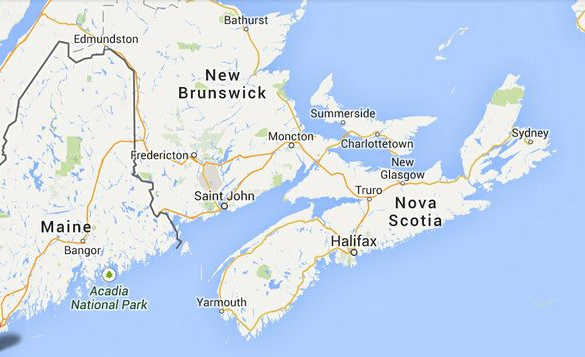 This was our third road trip east, since the pandemic started. It allowed us to get out of town without using hotels (much) and enjoying the great outdoors. This time we decided to visit one of the Canadian Maritimes, and hug the Maine coast on the way up and over. We counted fall 2023 as post-pandemic, since we threw caution to the wind and did not tent camp this time. So far, no COVID has touched us.
I developed a hankering to visit the Maritimes because of two pieces of art. The first is Shipping News, by Annie Proulx. The second was the 2012 musical Come From Away, based on real events the week after 9/11, when planes were grounded in the US for a week and many were diverted to Newfoundland.
We chose Nova Scotia because it was the closest of the islands, and we had friends who had gone there and had a great time, especially hearing all the Celtic music. This fall, two weeks before we arrived, Nova Scotia was hit by Hurricane Lee. We weren’t sure how much damage there was, but a Google news search showed limited damage, so we headed on up.
We brought our bikes, as usual, but left the kayak/solo canoe behind because of the hassle and drag on mileage.  Our first stop was an Airbnb near a great beach in southern Maine: Ogunquit Beach. Evidence of Hurricane Lee was there. The beach was full of shells, lobster fragments, and other detritus from high waves. We got a baggy full of treasures and moved on up the coast.
Our next stop was the bottom of the Blue Hills peninsula, recommended to us by an old workmate, who is an avid kayaker and all-around adventurer, now living in Maine. Castine lies across from the Bar Harbor peninsula, which is very busy this time of year. On two previous trips we spent some time in Acadia Park and camping next to the harbor. I remembered fondly the lobster rolls we gorged on in Bar Harbor in 2020.
Castine is where we first got onto the ocean in kayaks. Castine prides itself as a gateway to bioluminous waters in the bay. We signed up for a 6-9 pm small group trip to see them. We were blessed with a full moon. Not the best time to see bioluminescence, but by swiveling our paddles as we stroked, we could stir up the tiny fireflies of life beneath the sea. Calm waters, glowing moon, sparkling light show. Biking to and from our lodging across the peninsula in the dark. Not bad!
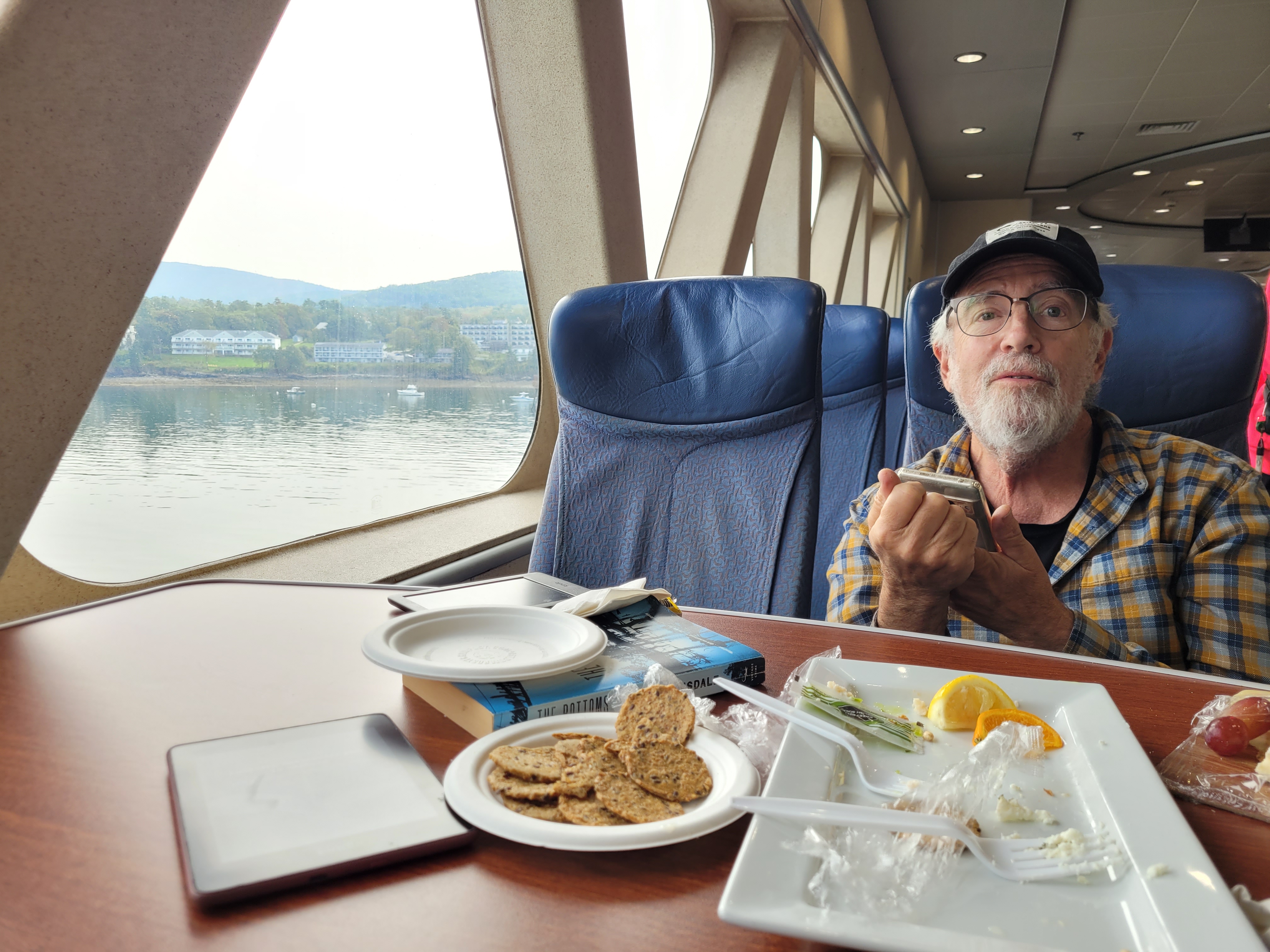 The next day we headed up to Bar Harbor to catch the ferry to Nova Scotia. In contrast to the ferry my sister and I took from Cornwall to Isles of Scilly last October, the ride was calm and the food was delicious. We could have played Bingo with others on the foredeck, but declined. We arrived in Yarmouth, where we had booked a hotel room for the night, before setting out on our nine-day meander along the Atlantic coast.
Liverpool was our first stop. We stayed at the Lanes Privateer Inn, named for the Privateer who originally owned the large house. As often happens to “history,” less than honorable activities acquire a romantic sheen, part of selling a town for tourism. Our first dive into privateer history seemed to tie the romanticized pirates to American militiamen, who headed north during the revolutionary period to encourage Nova Scotians to join the war against the British. Now that I am long back and adding some information gleaned from Google, the local privateers were also used to ethnically cleanse French Acadians from Nova Scotia after war was declared with France in 1755. In 2018 we ran into this history when we crossed an old bridge near St. Martinsville, Louisiana. This archive piece from Spoils of War, a section from a Nova Scotia history archive shows the callousness of British privateers toward the new “foes.” If this history piques your interest in Acadian/Cajun history, this link continues the story, once many arrived in Louisiana.
Now Liverpool is full of Scots and Irish, as this video snippet we took shows while enjoying a pub dinner on Friday night.
Liverpool was the only town on our journey that still suffered significant effects from the hurricane. There was still an alert to boil water that had been contaminated. Our inn provided us with bottled water.
While in Nova Scotia we noticed many people wearing orange T-shirts. We learned that September 30 was National Orange Shirt Day, a day in recognition of the Truth and Reconciliation process that resulted in atonement for the brutal assimilationist residential schools for indigenous children that were last shut down in 1967. The month of October follows with an indigenous people’s month of activities. We were surprised how many orange T-shirts we saw on Friday and Saturday. I learned that a new culturally-appropriate curriculum was developed with 50% indigenous teachers. The resulting academic success gives the lie to the forced assimilationist tactics of the past.
The next historic town, and an UNESCO World Heritage site, was the port and fishing town of Lunenberg. This designation requires a scrupulous preservation of the 250-year-old buildings and architecture. We stayed in a mini-suite of rooms at the top of the Lunenburg Arms that looked down on all the multicolored buildings. 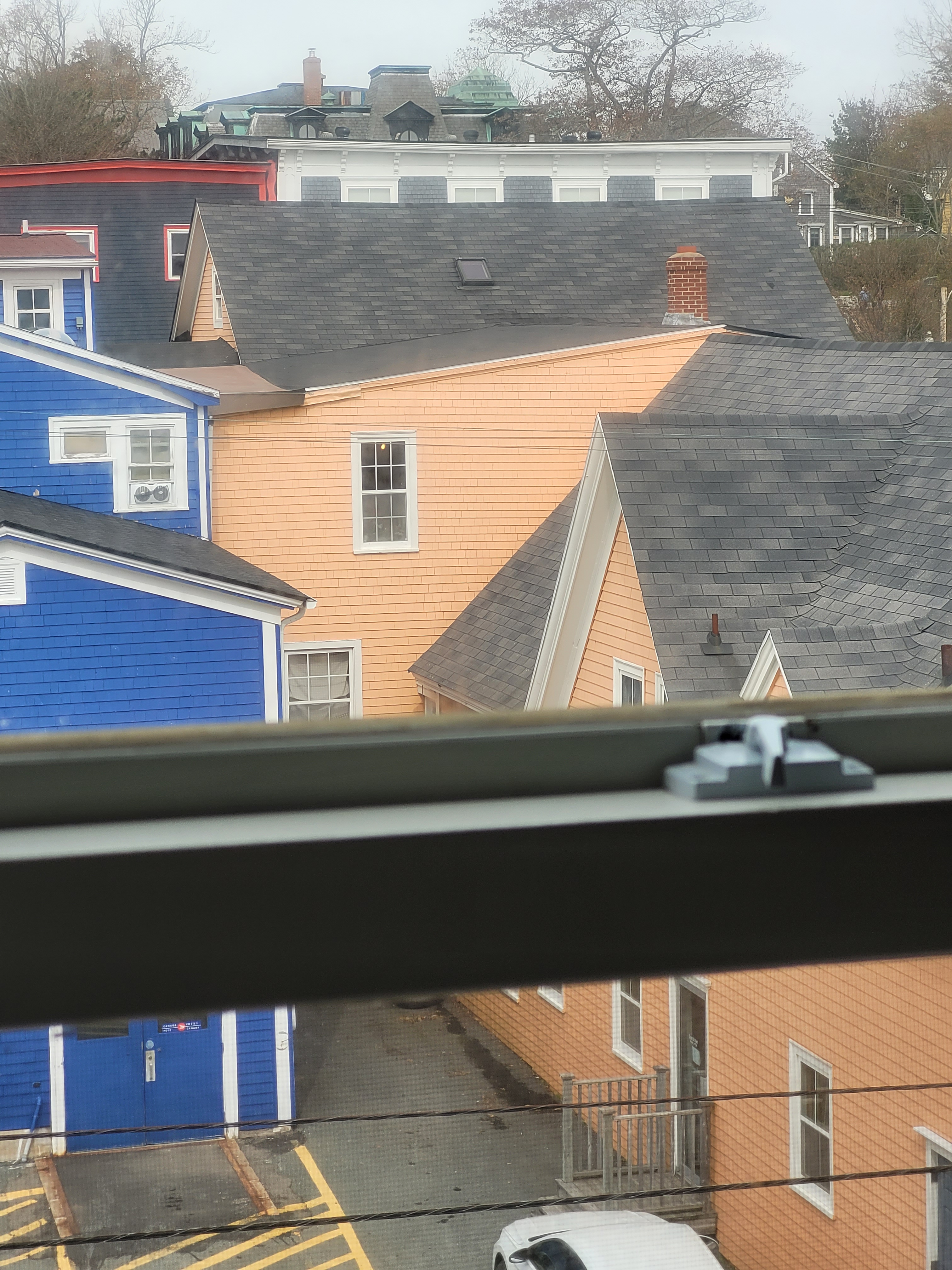 A welcome gap in the downtowns of these small old towns were the worldwide American franchises that uglify the land and corrupt the traditional diets of humans. One exception made me laugh. In an effort to accommodate the food preferences of folks living at the doorstep of fresh seafood, a Subway offered this: 100% Canadian lobster on a bun. No thanks.
Since we had booked a two-day stay in Lunenburg, it was time to take down our bikes and locate some fun routes. Our innkeeper recommended one—a long slow ride uphill to a coastal beach called Blue Rocks. We finally stumbled our way to the beach, after abandoning our bikes for a narrow rocky path down. It did not disappoint. I just discovered online that there is a Blue Rocks Village farther down the road! We had given up the search by then, but I am not sorry we did, as our beach was an undisturbed blue granite outcropping that was pristine and with few other people. I guess we had discovered Blue Rocks Commons Trail.


The next day we headed up the hill again to an entrance to the Bay to Bay Trail that we had noticed the day before. The trail took us down a long, lovely, tree lined path that eventually gave out to views of the Bay and the town of Mahone Bay. The path offered a second example of hurricane damage—dozens of birches lying down together like bowling pins in a strike. We were told that this was a result of the abnormal amount of rain during the summer that had loosened the soil and roots. The trees were no match for the strong winds that followed in the fall.
Our ride was on October 1. When we got to town, we noticed life-size characters all over. It turns out that 10/1 is called Skeleton Day. 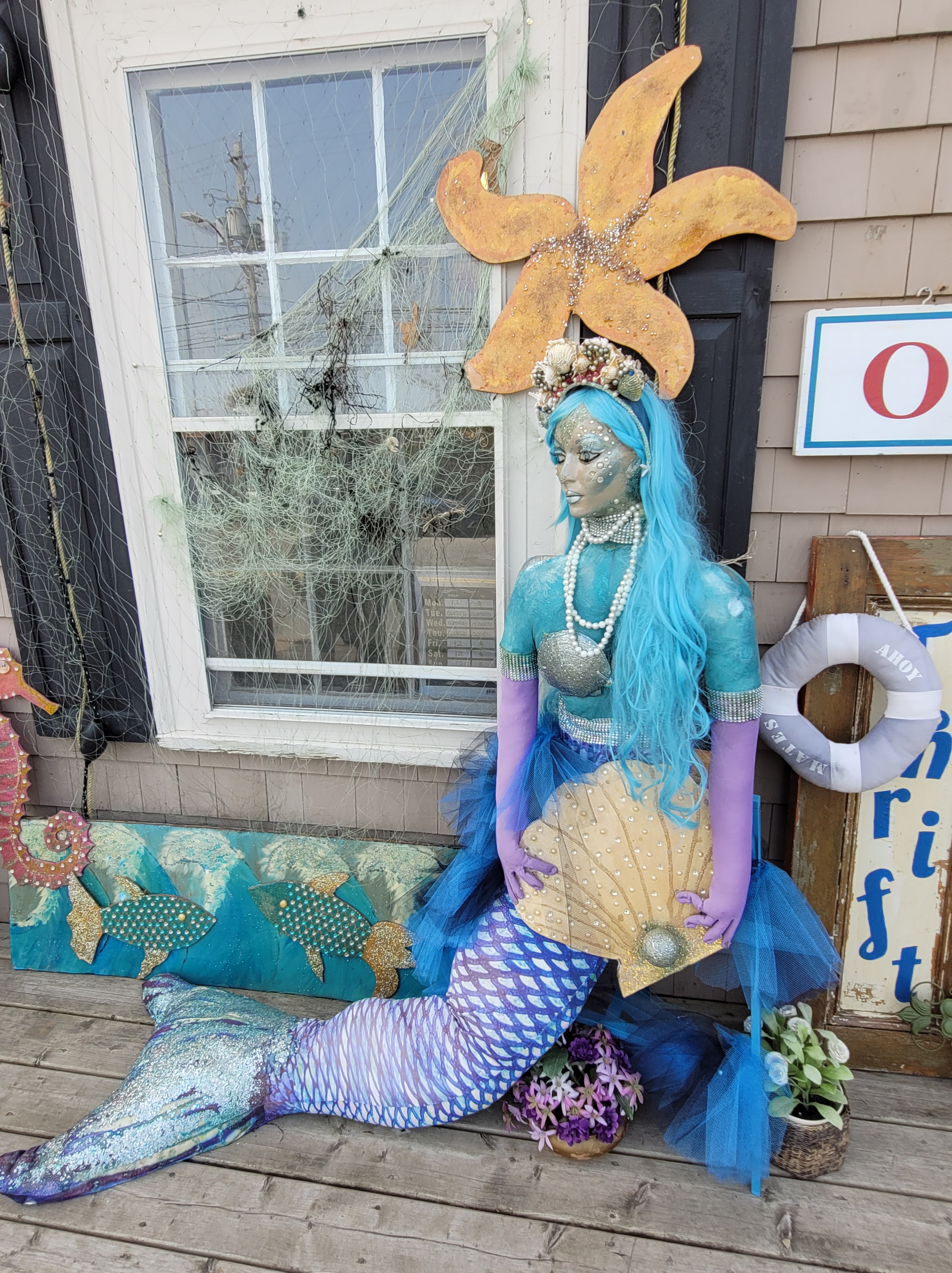
WHAT ABOUT ALL THE FISH, YOU SAY?! 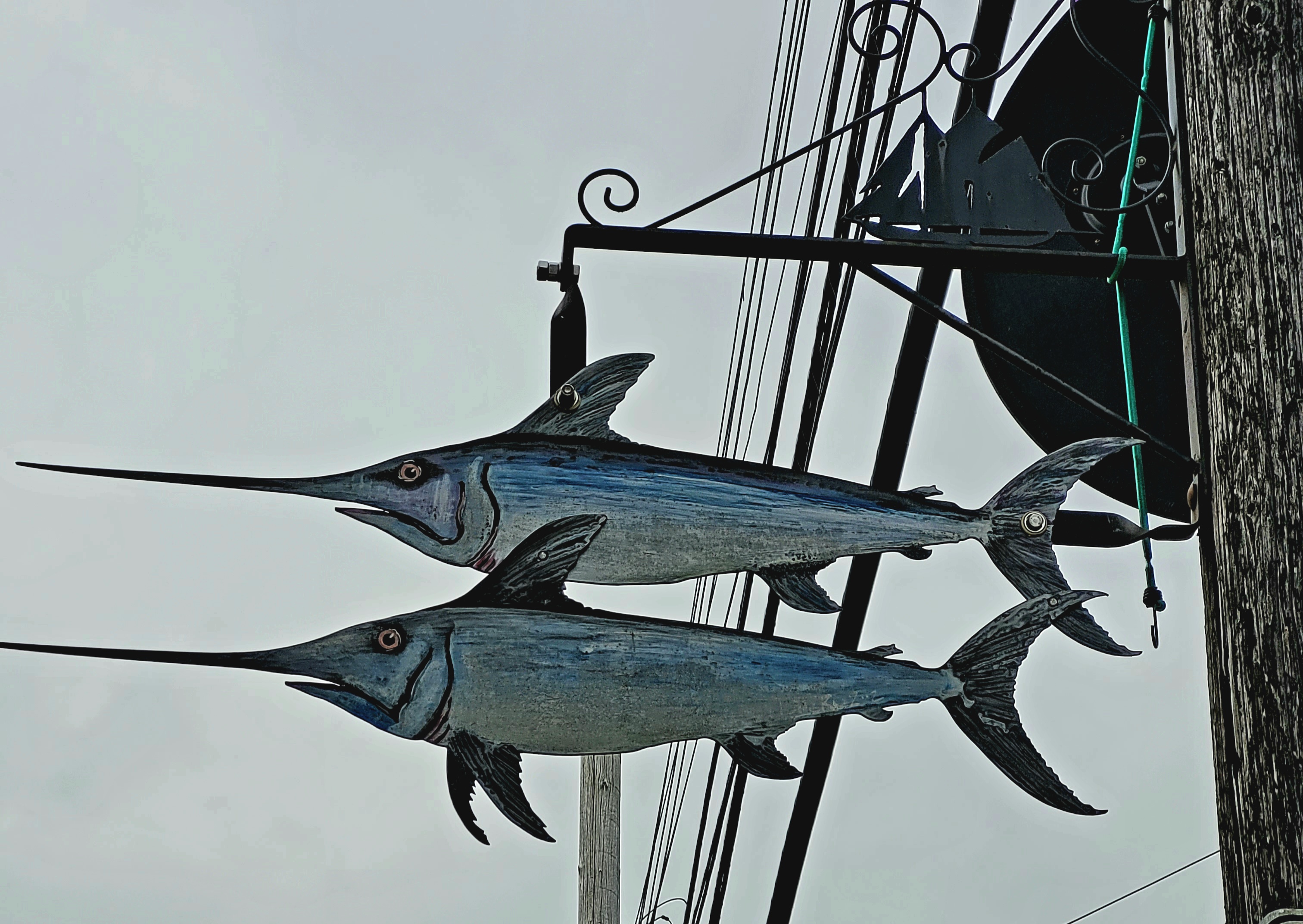 Every night and many lunches we ate fresh fish or seafood. I am not one to take pictures of the food I am eating. But trust me. Fresh fish are not the same as those we Midwesterners have as fish and chips.
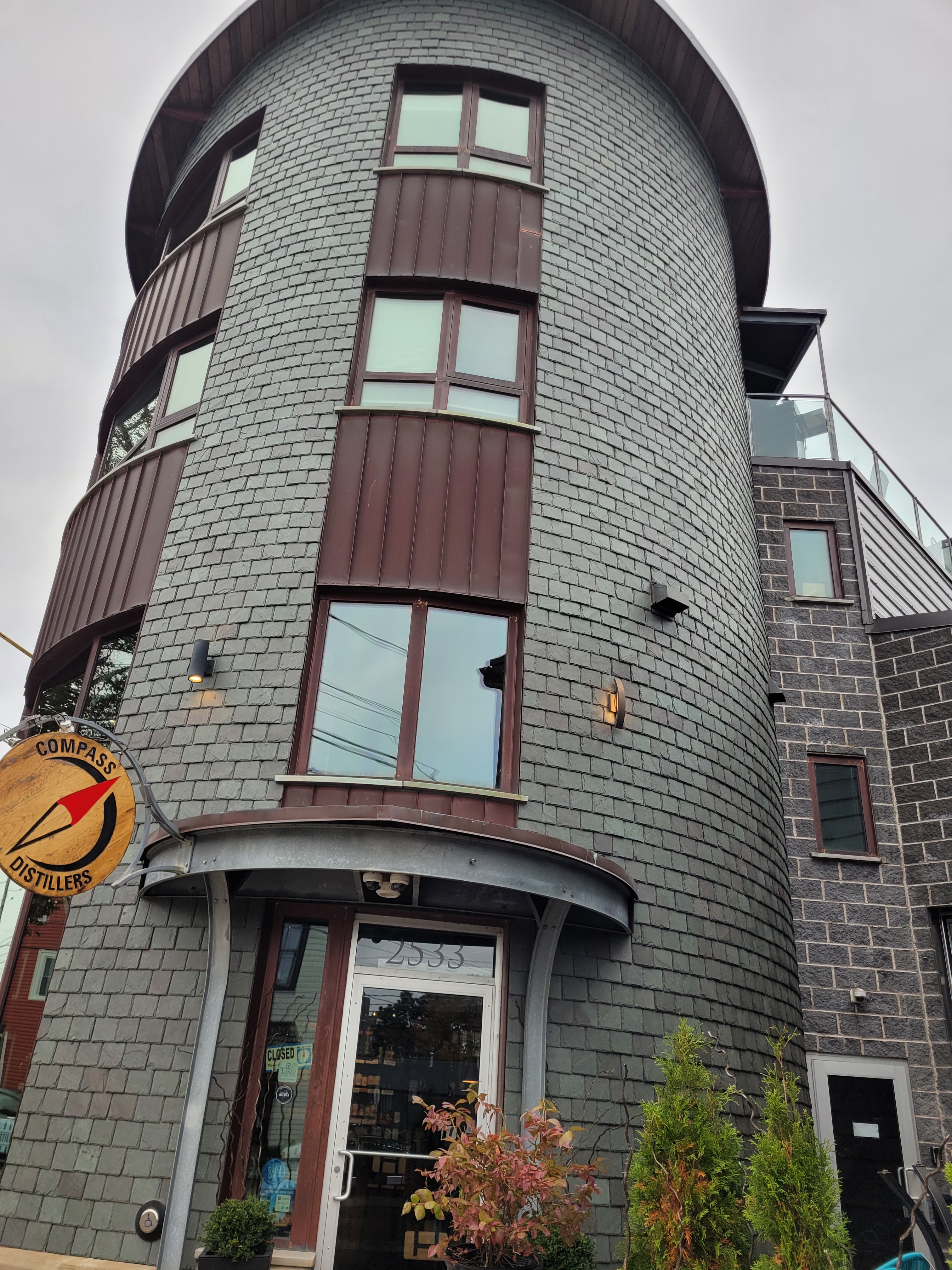 On October 2 we drove to our last coastal city—Halifax. What a splendid Airbnb my husband had found, three stories above Compass Distillers, on a fun street. Much more urban. Where would we bike? Halifax is the largest city on the Canadian Atlantic coast. It has a population the size of Minneapolis (<400,000) Its settlement history, around 1750 by the British, has the same sordid past as so many European colonizations in North America. The treaties made with the local indigenous people, the Mi’kmaq, were broken and fortifications built instead to defend against the tribe and the French. Fast forward 200-odd years. I just read that Queen Elizabeth in 2003 signed a proclamation, apologizing for the “Great Upheaval” (ethnic cleansing) of 1755. I would include the link, but it is not allowed because the archive wants to sell me the proclamation.
Our final day trip in Halifax was to drive over the bay bridge to the city of Darmouth, where the Salt Marsh Trail could be biked. It is part of the TransCanada trails. We did not know what to expect, but it was a splendid 8-mile round trip crossing of a saltwater bay on an old railroad bed. Highly recommended. Easy and gorgeous.
Our lofty home above the distillery allowed us to end the day talking to the owner and perfectionist cocktail chef around the tiny sampling bar.
On our final day in Nova Scotia we diagonaled across to the famous Bay of Fundi and ate one last fish lunch before taking the ferry back to the States.
 Other states, other lives, other souls
As usual, enlightening and thanks for taking me along
LikeLike
Thanks for reading these. It means lot to me
LikeLike