In mid-summer of 2016 my daughter and her partners held a 14 day permaculture design course on a small ranch above Bozeman, Montana. My daughter recruited me and my husband to cook for the 30-some participants for the first three days, using the detailed menus she had created and sourced. We had a history of preparing gourmet meals for 6 to 8 people as silent auction prizes, and joining with our foodie friends to prepare food for over 100 people for wedding receptions. We were a little nervous, but not inexperienced. We were responsible for 3 meals a day, aided by a rotation of class participants helping with prep and clean-up.
The hilly grassland training site was owned by a physician with permaculture sympathies, but had little in the way of education buildings, housing or bathhouses on the property.  The trainers walled in a pole barn with piled straw bales and long extension cords to create a training and eating space. When we arrived the physician was finishing a bathhouse with sinks and running water, supplied by large rain barrels. Porta-potties were nestled nearby. Showers had been built with wooden platforms and curtains on PVC supports. Some kind of stainless steel hanger-tripods were inside to hold the solar heated bags of water.
 We discovered that the cooking was to be done primarily in a small food truck, donated by one of the participants. It held a refrigerator, 2 stainless steel sinks, a couple of ovens, an exterior propane stove, and adequate counter space. Water was supplied by attaching a hose to the inlet valve, leading from a nearby well. Gray water dropped into a large bin below, with an outlet leading to the ground below the truck. The truck was well stocked with pots, bowls and utensils, and with a large cooler full of eggs, kale, and garbanzos. These were staples of the menu. The kale needed massaging to be easy to eat twice a day in salads. The garbanzos and lentils needed soaking at least overnight to sprout, to make them easier to digest. The eggs needed boiling at the end of every day, to be ready for breakfast. Granola had been pre-made. There were lots of spices and herbs to make all the basic ingredients taste good and vary from day to day, along with grated cheese. Twice during the time, there was meat for a cookout, using the outdoor grill.
The high plains of Montana are generally very hot and dry in July. Temperatures typically rise into the 90s during the day and then drop quickly as the wind comes up and the sun goes down.


For housing, participants and staff either brought tents or small RVs. We had driven out from Minnesota, bringing our two mountain bikes and two tents. The bikes were very handy, as the distance between the food truck and the storeroom with the rest of the food was a couple of blocks. We could also drive, when large quantities needed to be schlepped from the storeroom to the kitchen site, but most of the time, we biked.

Our big two-room tent became the child care center for the half dozen kids who came. We put up our smaller tent in the grassland beyond the hubbub. It glowed with warm orange light as the sun went horizontal at the end of the day.
Cooking fresh food three meals a day for 30 people took long hours. It also took a long time to get the old percolating coffee urn to finish its job. We felt the pressure when we opened the food window at 6:30 am, only to find a few anxious souls waiting hopefully with their cups for that first jolt, which would not come for another hour. We quickly recruited volunteers to get up earlier and start the coffee machine, so we could get on with the rest of breakfast when we got there.
The little steel food truck was cute, but was not without its faults. 95 degrees in a tin box is not ideal. I took to putting the leftover morning coffee in the fridge, where I would slurp down the icy caffeination most of the day, to keep up the pace. By the end of the first day the water system began to break down, probably due to food residue clogging the pipes. The boyfriend of the food truck donor was handy and disappeared under the truck to get it going again. On the second day, however, the boyfriend ran off with his truck, after a tiff with his girlfriend. He was a bit high strung, having completed several tours of duty in Iraq before roughing it with the organic hippies in Montana. Another triggering incident occurred during their arrival, when he accidentally turned onto the dirt road next door, whereupon the owner appeared with a rifle pointed at them, yelling about getting off of his property. For whatever reason we had to limp along with a broken water system until he reappeared in good spirits on the third day.
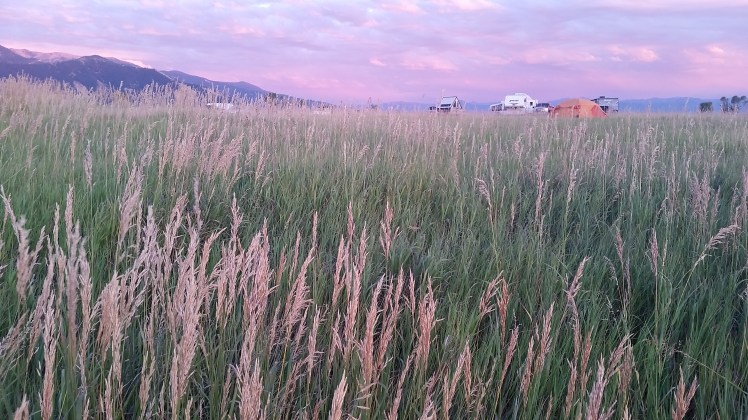 Twelve hours over a hot stove makes for a good night’s sleep. The sunsets were splendid and the night air invigorating. We got lots of appreciation from everyone for our cooking and lots of help from the volunteers. There were no special dietary needs, except for one older woman who informed us apologetically by the second day that she could really only eat sautéed leeks, because of her various digestive problems. Sautéed leeks it was!
By joining the staff in a part of Montana that was new to me, cooking meals in a challenging setting, and witnessing how the permaculture ethics of communality, repurposing, and resource conservation were translated into a teaching environment, I left with a deeper understanding of each aspect and a great set of memories.
 Other states, other lives, other souls
Pretty amazing…what don’t you do, Carol and PHil? That for the update!
>
LikeLike
I realized you and Phil were excellent cooks, but didn’t realize you’d had so much — and such varied — experience. Twelve ways with chickpeas and kale! I can see that permaculture takes a lot of enterprise.
LikeLike
We have a gourmet cooking posse and used to offer ourselves as silent auction items for our favorite non-profit.
LikeLike