One of the goals of my travel blog is to encourage people to plan their own travel more. The purpose is to engage more ahead of time with what you want to see, make it more likely to meet the locals, and to have some unexpected and, ideally, delightful surprises. It is usually much cheaper too.
But sometimes a group tour is the best choice. I don’t recommend kayaking in the ocean alone! Unless you are very skilled and have emergency backup. In the early 2000s, we signed up for two weeklong ocean kayak tours. They were led by experienced guides and only a dozen people were in the group.
The most exciting was our trip down the Baja Peninsula, in the Sea of Cortez. The company we signed on with, Tofino, started on Vancouver Island, Canada, in 1988. Today, they are a much larger, award-winning family-owned business.
Baja, from the town of Loreto south to La Paz, is an arid, mountainous wilderness. In order to take care of the ecosystem, we used big double kayaks with center holds, so that we could bring in and take out everything. By everything, I include a portable potty, which, fortunately, was not our kayak’s job to carry. 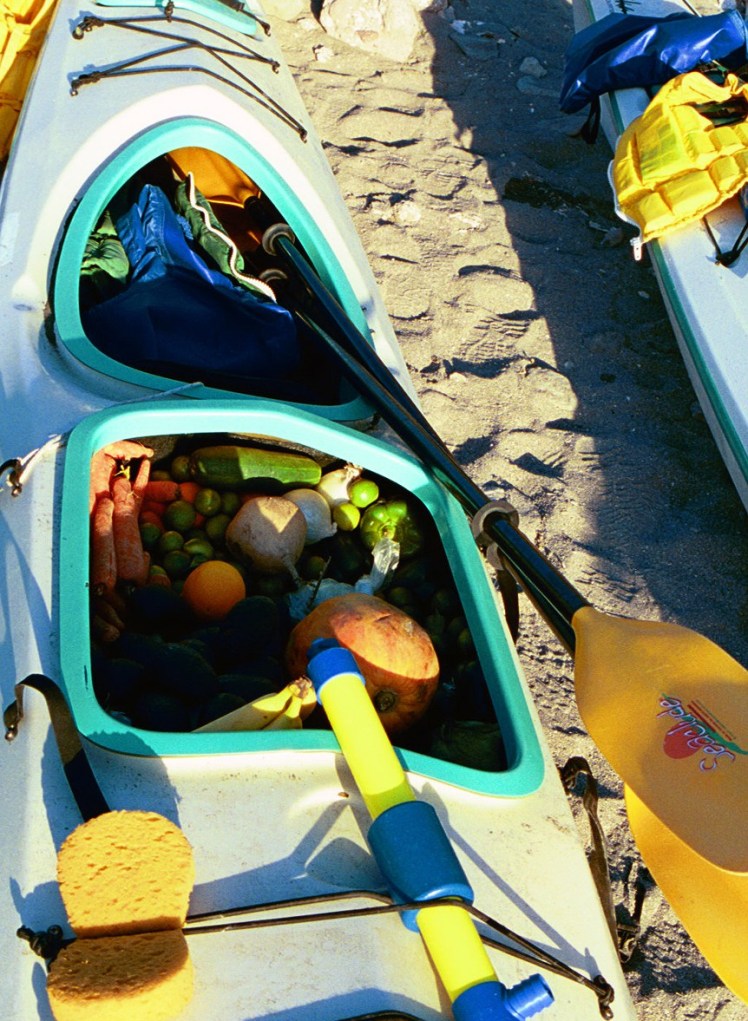 We got to carry all the heavy fruits and veggies that went into the delicious meals our two Mexican guides made for us every day. This made for very stable and heavy boats.
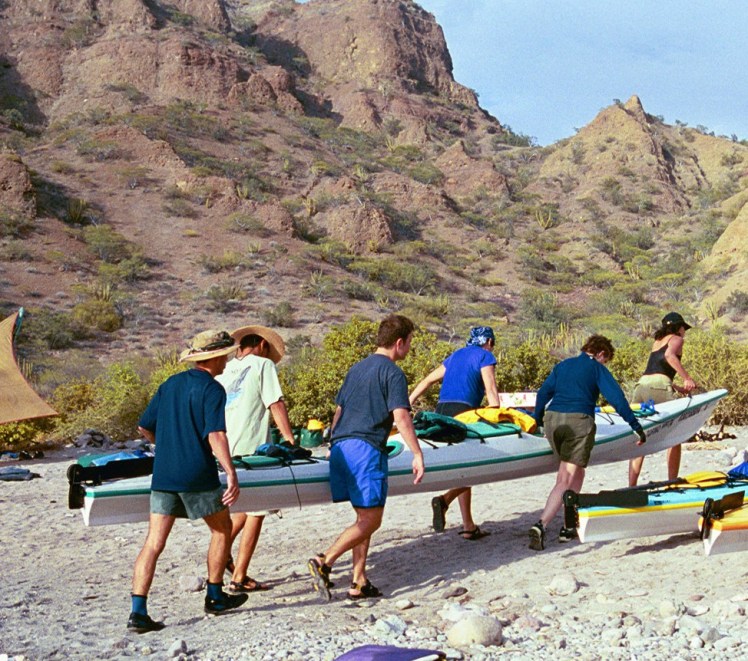 To carry them onto shore, a team of six placed straps around shoulders and under the boats and hauled each in like a captured whale. A mini version of the Fitzcarraldo, if you will.
It was not whale season but we saw plenty of marine life, both aquatic and feathered. This was the first and last time I saw a number of hammerhead shark skeletons. Who is the predator of a hammerhead shark? We also saw many blue-footed boobies (featured image), who look hilarious. Our biggest sea thrill occurred as our group was paddling south in deep waters. 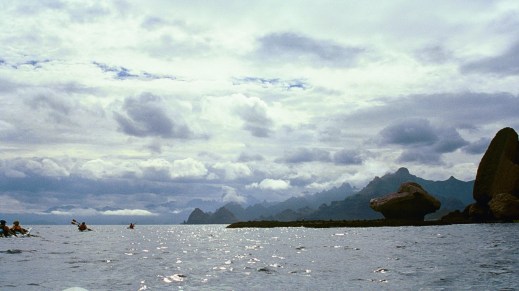 We looked north and saw that the water was suddenly aroil in scores of spots and coming rapidly toward us. Too late for evasive maneuvers. As the roiling got within 20 feet of us, we realized that a big dorado was chasing a school of flying fish. Soon little flying fish were zooming over the boats, in the boats, and around the boats. At least one slapped the face of one of our kayakers as it flew by. No injuries and a wonderful show of raw nature.
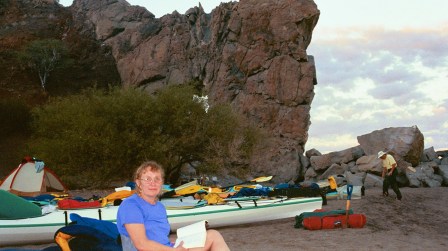 Each night we beached our boats and camped near the shore on the grainy sand. If we were lucky our guides would dive for rock lobster to serve in our tacos. After snorkeling or reading, they would start a campfire and we would bare our souls, knowing we would not meet again. Most were young, unmarried doctors. There was one squid expert Scotsman and his wife, who referred to passing along the toilet paper to the next person headed toward the hidden potty as “the grim relay”.

We slept in tents and were warned not to put our shoes on in the morning without turning them over and dumping out any scorpions who may have nested in them overnight. It’s the small ones that are most poisonous, we learned.
The stars, of course, were at their sparkling finest in the dry air. We missed seeing them in our tents, so one night we took out mats and slept out in the open.  In the morning, well rested, we got up from the mats and noticed that there were rattlesnake tracks around our mat edges. We went back to tent sleeping. After 4 days of kayaking about 4 hours per day with a long lunch break, we reached the put-in point. A large van was there to ferry us back to Loreto. From Loreto we flew to San Diego and then home to Minneapolis.
  A few years later my husband went to a fundraiser with a silent auction. He bid $25.00 and won a large painting by an amateur painter physician. It was very evocative of the desert terrain we visited in Baja and is a nice reminder as it hangs above a chaise lounge in our bedroom.
 Other states, other lives, other souls